
Visiting Palenque Village: Discovering Cartagena's African Roots
Justine
Feb 9
2 min read

My first step toward learning about the African roots of Cartagena was visiting Palenque village (you may see different spellings of the name). I chose to take a guided tour in order to learn about the village’s history from a reliable and knowledgeable source.
To fully understand Palenque, you first need to know that Cartagena was once home to one of the largest ports involved in the transatlantic slave trade in South America. Enslaved Africans were brought through this port in the early 1600s. Fortunately, some of them managed to escape and fled into the surrounding forest, where they founded what would later be known as Palenque.
These maroons, or formerly enslaved people who escaped captivity, were led by Benkos Biohó, one of my ancestors, originally from Guinea-Bissau. Together, they established a fortified village that eventually welcomed many more runaway enslaved people from different parts of West Africa. Because they came from various regions, they created their own language, a mix of several West African languages, which is still spoken by the inhabitants today. I found absolutely incredible that the language survived.

What Benkos Biohó started was unprecedented in the Americas. The village continued to grow over the years, to the point where Spain was forced to negotiate treaties with Palenque in an attempt to stop them from recruiting more maroons (which Palenque never did). Palenque eventually became the first free African town in the entire American continent.
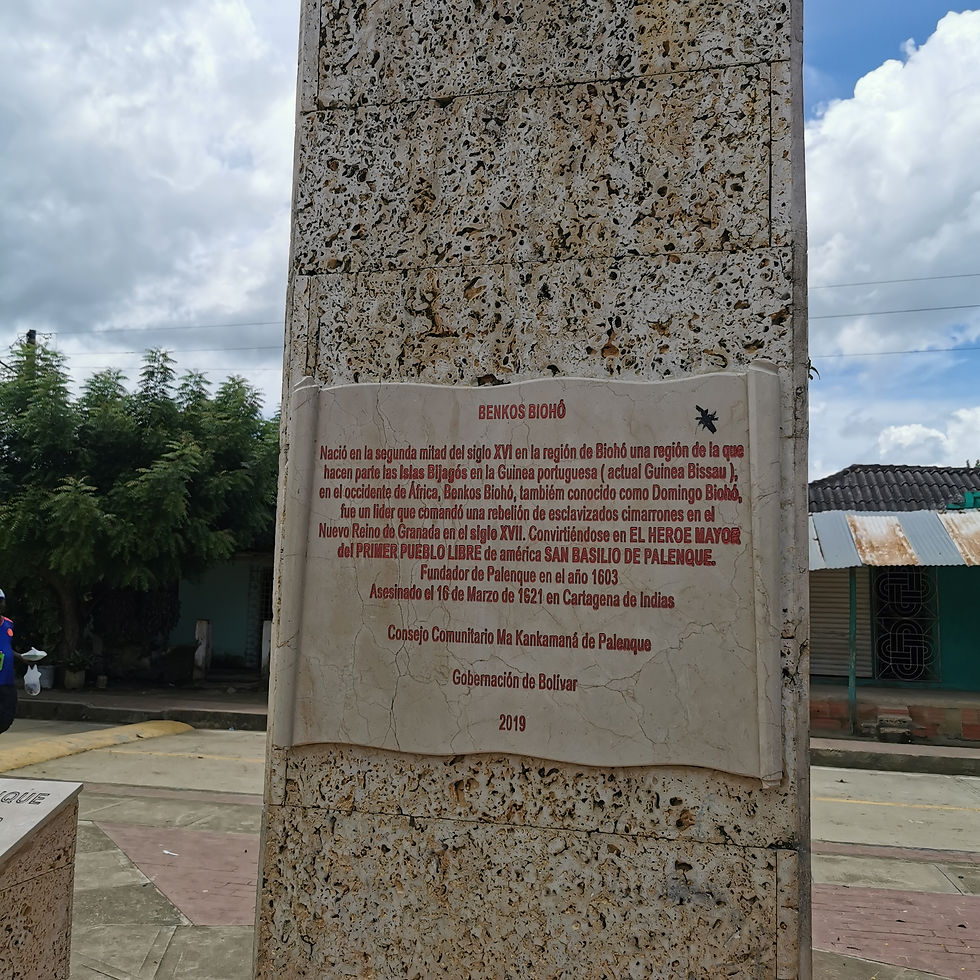
As a West African, and more specifically, as someone from Guinea-Bissau, visiting Palenque was really interesting. The village genuinely looks like a village from my country. As I walked through the streets, I felt as though I was back in Guinea. The way the houses were built and painted was similar, the people looked West African, and the overall atmosphere felt incredibly familiar. I was truly shocked by the similarities.

One of the guides explained how the maroons used drums to communicate warnings about approaching danger, just as they did in many parts of West Africa. Another guide shared how women used specific braid designs as maps, helping them memorize routes for meeting points. They also designed their homes to protect against extreme heat and used traditional kitchenware to keep water cool. The ingenuity of my ancestors left me in awe.

Another fascinating aspect of Palenque is the history of the palenqueras. You have probably seen photos of these women wearing colorful skirts, white tops, and carrying fruit baskets on their heads. These women are from Palenque. Historically, they traveled to Cartagena to sell fruits and goods. Today, people don’t buy their products, but they take photos with them, which has become their primary source of income.


My pleasure Amelie.
it make me wanna visit, thank you for the article and history of Cartagena 👌🤗